Saturday, July 21, 2012

Power Of Giving Study

** The Following Information is courtesy of The Society Of American Florists

Rutgers: Flower Givers Perceived as Successful and Caring


Happy birthday, congratulations, thank you, I love you, thinking of you. Each day, millions of gifts are exchanged by people who want to send thoughtful regards to deserving friends and loved ones. According to research from Rutgers University, the presents we pick to convey our special messages say a lot about us.

Rutgers University researcher
Jeannette Haviland-Jones, Ph.D., director of the university’s Human Emotions Lab, explored what the gifts we choose say about who we are and whether they affect how we are perceived. The research reveals that those who send flowers, in comparison to other gifts, are viewed as successful, caring and emotionally intelligent people. More specific findings include:
  • Both men and women who give flowers are perceived as happy, achieving, strong, capable and courageous people;
  • Men and women come across as more emotionally intelligent; they give the impression they can effectively express their feelings and take time to understand the feelings of others;
  • and Female floral gifters are viewed as more appreciative of beauty and nature.


“Our findings show that you can influence and change what people think of you in a significant way through the gifts you give,” says Haviland-Jones. “That news is particularly important to those interested in enhancing friendships and romances, even business relationships.”

Discovering the scientific power of flowers is not new to Haviland-Jones. Previous
RutgersUniversity research conducted by her team found that flowers create instant delight and happiness, and increase enjoyment and life satisfaction. Specifically, upon receiving a gift of flowers, the female study participants responded with true smiles and reported positive moods that lasted for days. The presence of flowers also led to increased contact with family and
friends.

“Flowers have evolved to activate positive emotional responses from people,” says Haviland-Jones. “Each bloom has the potential to put a smile on our face and sway our opinion of a friend, colleague or loved one. That’s powerful.”


M.J. Ryan, award-winning author of the Random Acts of Kindness book series and The Giving Heart, uses cutting-edge science to bring out the best in people. In her books, she teaches individuals how gratitude and generosity can result in greater happiness, health and feelings of human connectivity.

“Gift recipients experience compelling connections with givers, and the positive link is particularly evident in the exchange of flowers,” says Ryan. “In my everyday work with individuals, CEOs and leadership teams at some of the world’s top global companies, I see the powerful implications of gratitude and appreciation.”

According to Ryan, a simple call to the florist can make a big impact beyond conventional gifting occasions. Some of her favorite, unexpected gifting opportunities include surprise recognition for a job well done; an “I miss you” gift for an out-of-town family member; and an advance “thanks for hosting us” gesture before visiting a friend’s house.


“A successful person is not necessarily someone with a lot of money and material goods, but rather someone who is in tune with people and knows how to touch their hearts,” says Ryan. “I can think of no other item besides flowers that evokes such positive feelings and perceptions for both the giver and the recipient.”


Thursday, July 19, 2012

Pet-Friendly Bouquets


Sending a bouquet or arrangement is always a great gesture, however recipients with pets can pose a bit of a challenge. Many pets can be overly curious over the floral arrangement sitting on the kitchen table, and might even chew some of the blooms or leaves. While many florals might only cause mild indigestion or have poor taste to your pet, some can heed more serious problems. For example, florals such as Stargazer or Tiger Lilies can cause serious kidney problems if ingested by cats. When sending an arrangement to a pet owner, it's always best to choose a pet-friendly bouquet. 


A pet friendly arrangement consists of plants or florals that are not toxic to cats or dogs. Florals such as roses, daisies and orchids are non-toxic, meaning they would be suitable for a household that has cats or dogs. 


For households with cats, Alstromeria is a fantastic substitute to lilies. Also remember to request ferns as greenery instead of baby's breath. When placing your order with a florist, it's a good idea to let them know if the recipient is a pet owner, as they will know which florals to omit from your arrangement.


The ASPCA Animal Poison Control Center is a great resource to learn more about which plants and florals are toxic to our furry friends. It is also important to note the scientific name as well as the common name of plants and florals, as the common names can be shared among multiple species and can carry different characteristics. 


 Many pet owners enjoy the gift of a floral arrangement, however most are unaware of the dangers that beautiful florals can pose for their beloved animals, it's best to take the precaution ahead of time and send an arrangement that is not only beautiful, but safe.

The Endearing Language of Flowers

The language of flowers is a language of love, endearment, and respect. The truly popularity of flowers lies in their ability to bring joy, and good cheer.


The fascination with flowers have captivated, and charmed people world wide.  They represent a form of life that has endured evolution, and continues to flourish.  With a diversity of colors, forms, scents, and uses, flowers have been revered by generations of admirers, and enthusiasts alike. Throughout history flowers have been the perfect form of expression, when words were hard to find. The language of flowers is a language of love, endearment, and respect. The truly popularity of flowers lies in their ability to to bring joy and good cheer. 

The first flowering plants found were tiny herb-like flower fossils dating back 120 million years. An innumerable number of images of preserved flowers and flower parts have been found in fossils located all over the world. According to scientists, there are over 270,000 species of flowers that have been documented and are living in the twenty-first century. Scientists continue to marvel over the amazing diversity of species, and the species that have not changed much during evolution. Many flowers have coevolved with their pollination animals.


The flower is the reproductive organ of a plant.  It is the job of the flower to produce seeds through fertilization, and pollination.  Pollination requires animals (bees, hummingbirds, etc.), wind, or water to transfer male pollen to the female ovule. After a flower is fertilized, it develops into a fruit containing seeds.  These seeds are the next generation, and serve as the means by which species of plants are dispersed across a field.  Cross breeding can occur, and this leads to the enormous diversities seen. 

The alluring nature of flowers has made them subjects of folklore, and poetry.  Their medicinal use has been embraced by the east for centuries.  A flower’s fragrance is its personality, a beautiful bouquet of scents that permeate even the worst form of pollution. Flowers have been associated with religious symbolism, the lily signifying purity for example.  The diversity of shapes and colors makes them the perfect decoration, and the perfect gift.  The likelihood of two people having the same color, shape arrangement is very remote. Edible flowers have been used in the culinary field for flavor and garnish for many years.


It is clear that flowers do have a very endearing language.  A language that is universal, without borders.  A language that contains no negativity, nor prejudice.  An unconditional way of expressing a feeling so deep, that words could never convey the true meaning. Regardless of the situation, the sight of a flower will always solicit a smile, and a sense of warmth.

Tuesday, July 17, 2012

Plants For Your Greenhouse

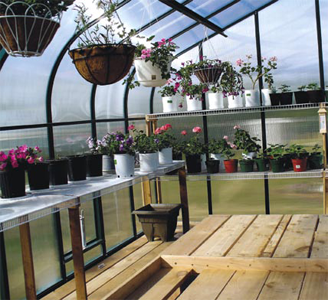
Ok, you've put a lot of effort into planning and building (or installing) your greenhouse. You've got tabletops, benches, pots, shelves, cabinets, watering systems and a dozen tools to help. Now, you get to really enjoy what greenhouses are all about - plants!

The 'green' part of greenhouses is usually the most fun, since that's why you get one in the first place. But here, too, you'll want to do some planning and careful execution. That planning should start at the same time as that for the greenhouse itself. The structure and its contents should be well matched for optimal results.


Fortunately, you've got hundreds of choices.

Consider first where you live. Even in a greenhouse, the amount of sunlight per day throughout the year, humidity and temperature levels and other variables need to be accounted for.

Northern Idaho, for example, has long, dry summers. New Hampshire, even though it's also in the northern latitudes and gets about the same amount of rain and sun, is much more humid. You can only control humidity to a certain level.

If you get plenty of sunlight in the summer and early fall, or can compensate with artificial lights, tomatoes love greenhouses. The high heat makes them grow great and, since they are easily injured by frost, they appreciate the protection in the Fall.


Some citrus fruits, like oranges and lemons, are nearly impossible to grow outdoors in certain locations. It's simply too cold much of the year. But you can compensate in the greenhouse and actually grow your own.

Strawberries are another favorite for greenhouse gardeners. Commercial strawberries are expensive and many people have concerns about pesticides. You can grow your own and control costs and quell health concerns.

Radishes, onions, carrots, lettuce and spinach like cooler temperatures. They can really do well in a controlled environment like a greenhouse.


Then, of course, there are the traditional 'hothouse' flowers - orchids first and foremost. Orchids in the wild grow up higher because they benefit from the breezes. You can simulate that in the greenhouse with a simple fan and ventilation system.

Orchids can also be very expensive and growing your own can be a great way to save money and still have beautiful flowers. For the truly ambitious, there are dozens of competitions across the country for orchid growers. Be careful of getting bitten by the 'orchid growers bug', though. It can turn into an all-consuming hobby!

But lots of other flowers make great choices for greenhouses, too. Practically anything you would grow in an outdoor garden will do fine in a greenhouse, provided you have proper sunlight and shade control. Keep in mind, too, that some plants don't do as well in pots unless they are large enough that the roots have plenty of room to spread.


Most bonsai are outdoor plants, though some benefit from the protection of a greenhouse in high winds and cold winters. Take care that the species you select is suitable for a high temperature, high sunlight and humid environment.

Sooner or later, though, it's time to stop planning and start gardening. Enjoy!

Monday, July 16, 2012

Caring For Your Floral Window Box

Container-grown plants need regular attention to maintain them in prime condition and so ensure the best display possible. If you make it a habit to inspect them when you water, you will notice any problems as soon as they arise.


Watering
Window boxes and other containers dry out very quickly and regular watering is essential. It should be carried out in the early morning or late evening during summer months. If only one watering is possible, an evening watering is preferable as the plants have the cool night hours in which to absorb the water. A watering can is adequate for small window boxes although a hose will be more effective for larger ones.

Feeding
Most potting composts (soil mixes) contain sufficient food for only six weeks of plant growth. After that, you will need to feed your plants using a variety of plant foods such as slow release granules and pellets, liquid feed or a general fertilizer. Always follow the manufacturers instructions, as too much fertilizer or liquid feed can burn the plants roots.


Liquid Feeds
These are an efficient means of adding nutrients to plants, as they are added to water. Both organic and chemical varieties are available in many formulations. They may be added to the compost or sprayed directly on to the leaves, depending on the type. Apply liquid feeds bi-monthly in the growing season.

Deadheading And Pruning
Faded flowers will mar your plants and spoil your display. Remove them as soon as they fade. This will also encourage more flowers. Dead or drying leaves and stems also look unsightly and can rot and attract diseases, so remove these regularly.


Potting On
As your seedlings grow, repot them to grow on before transplanting to the window box. Divide the plants, if necessary, and plant them in pots. Established plants that have outgrown a container can also be transplanted to a pot one or two sizes larger, but with permanent containers just change the top layer of compost (soil mix), or remove the plant, prune the roots and top, then replant with fresh compost.

Evergreen Foliage
Evergreen foliage can become grubby over the year. In spring, wash off any accumulated dirt and check for sooty moulds or signs of infection by pests such as caterpillars or grubs. Spray the plants if you find any problems.


Saturday, July 14, 2012

Famous Ladies & Their Perfumes

Perfume Muses: Five Famous Women Who Inspired Perfumes

By Lisa-Anne Sanderson


"Of the women in my childhood, I retain above all the memory of their perfumes, perfumes that lingered - filling the lift with fragrance long after they had gone,” Christian Dior once said.  Beautiful and famous women have inspired perfumes since time immemorial.  These ‘perfume muses’ include royalty, ballerinas and actresses.
In each case the perfumer attempted to capture the personality of the ‘muse’ in the fragrance and also create one which could be worn by other women. These fascinating women include the Empress Eugenie, Anna Pavlova and Audrey Hepburn.

Empress Eugenie

Napoleon III married the Spanish Eugenie de Montejo for love instead of for political reasons.  This was unusual in those days when kings usually married to create alliances with or to further alliances with other countries and to produce children.

Elegant and fashionable, Empress Eugenie set many trends and inspired several perfumes.  These include Eugenie by Rance and Eau de Cologne Imperiale by Guerlain. 


Eugenie was a delicate and romantic perfume with lily of the valley and citrus fruit. Rance used the original blend to recreate the scent in 2006.

Eau Imperiale was created by the founder of Guerlain in the Empress’s honor. This blend of fruits and flowers so impressed Eugenie that she gave Guerlain the highest royal warrant, making him her Appointed Supplier.  This perfume is still available and makes a fine addition to any collection, with its glass bottle adorned by the bee symbol of the French Royal family.

Anna Pavlova

When Dr. Nadia Payot, Payot’s founder, met the great Russian ballerina, Pavlova, she noticed that Pavlova’s body was still well-toned and firm even though she was 38.  Unfortunately, her face was rather wrinkled and lined.  This inspired Payot to develop a beauty system which she thought would rectify this problem so she devised her famous 42 Step Facial Gymnastics. Payot also dedicated a perfume to Pavlova.  Called Pavlova, this is a floral scent with hints of musk and cedar, making it suitable for evening wear.


Greta Garbo

The enigmatic actress, who starred in many movies, including Anna Karenina and Camille, once said: “Movies! We weren’t making movies, but perfumes!”

Crown Tanglewood Bouquet was inspired by Garbo.  This woody, floral fragrance has the power to scent a whole room, according to legend.


The Italian fragrance, Ace of Hearts, by Bertelli is also said to have been dedicated to the stunningly beautiful actress.

Mae West

Elsa Schiaparelli designed clothes for this voluptuous actress and modelled the bottle of her scent, Shocking, on West’s figure.  Rochas also based the bottle of his perfume, Femme, on Mae West’s hour-glass shape and swathed it in sexy black lace.  Rich and fruity, Femme, was designed as a wedding present for his new wife, Helene.


Louise Brooks

The heady and sensuous fragrance, Lulu, was created for dark-haired beauty and actress, Louise Brooks.  Based on the Tahitian flower, Tiare, it was inspired by the role that Brooks played in the silent German movie, Pandora’s Box, in 1929. Brooks was a vaudeville performer who ruined the lives of everyone she became involved with in this film version of the myth in which Pandora opens a box releasing evil into the world.


Audrey Hepburn

When the gamine actress’s designer friend, Givenchy, created L’Interdit for her, Hepburn playfully said: “L’Interdit, it is forbidden”.  L’Interdit means ‘forbidden’ in English. Soft and romantic and containing rose, iris and jasmine essences, this perfume captured the beauty of the chic star.  Hepburn helped Givenchy formulate the scent. The pretty and romantic Spring Flower by Creed was also inspired by her. This has become a favourite among Hollywood stars, such as Gwyneth Paltrow. 


Celebrity perfumes became somewhat unpopular for many years after the 1980’s when Lulu was the ‘in-thing’.  Recently, fragrances inspired by women, mostly actresses, have been selling very well.  Liv Tyler, Monica Belluci and Jennifer Lopez are some of these perfume muses. As glamour is back in fashion, scents which make women feel like movie-stars are likely to remain ‘the rage’.

Thursday, July 12, 2012

Making Beautiful Pressed Flower Gifts

Now that summer has arrived and the flowers are in full bloom, why not use nature’s florals to make unique gifts for the special people in your life? One of the best ways to capture the beauty of nature in the form of a gift is to create with pressed flowers.
To make pressed flower gifts, you can buy the flowers already pressed at your local craft store or press your own easily at home. To press your own, simply collect flowers from your garden. Place the flowers into a heavy book and close it firmly. Add several books on top to increase the weight. After three days have elapsed, open the book and remove your beautiful pressed flowers. They’re now ready to use your flowers to make pressed flower gifts. 


Here are some pressed flower ideas for gifts:
 
Pressed flower gifts: Paperweight


Purchase a glass paperweight blank from your local craft store along with some matboard and felt in the color of your choice. Lay the glass paperweight on top of the matboard and trace around the edges with a pencil. Cut out the outline you traced from the matboard and arrange your pressed flowers in a pretty design on its surface. Use clear craft glue to attach the matboard to the underside of the glass paperweight blank so the flowers show from the top of the glass. Cut out a felt circle to cover the matboard on the underside of the paperweight to give a polished, professional look. Admire your finished creation .
 
Pressed flower gifts: Candles


This simple project makes a unique gift for Mother’s day or any other gift giving occasion. Buy a plain candle in the color of your choice. White and cream candles work very well for this project. Use craft glue to attach pressed flowers in an interesting design on the surface of your candle. Melt some beeswax in a double boiler on your stove and apply it to the surface of your pressed flowers with a paintbrush. This will encase and protect the flowers.
 
Pressed flower gifts: Laminated bookmarks


Here’s a super quick idea. Buy laminating sheets from your local print shop. Cut out two identical pieces of laminating sheet in the size you want your final bookmark to be. Arrange your pressed flowers in an interesting design on the surface of the sheet. Once you’re pleased with the arrangement, apply your second laminating sheet on top and seal them together. Punch a hole in the center of one end of the laminated pieces. You can use this hole to attach a ribbon or tassel for an added decorative effect. This makes a great gift for a serious reader.
 
Once you get started, you’ll find lots of other pressed flower ideas that you can use as gifts or to decorate your home or office. Enjoy the many options that pressed flowers offer!